

Someday, somewhere, the last car powered by gasoline will roll off the assembly line. It should be taken directly to a museum to mark the end of the an era.

Ford Model T
Cars have been part of our lives for more than a century, and most of them have been powered by gasoline. Now that we know that their emissions are a major source of the carbon dioxide (CO2) pollution that causes global warming, we must switch to electricity–or other options, such as hydrogen fuel cells, bicycles, car sharing, or even not driving at all.
Although the U.S. is not setting a timetable to cease producing gasoline cars, after the Paris Agreement, some other countries stepped up, particularly in Europe. In 2016, Germany said they’d ban new gas cars after 2030. In 2017, Norway, already a major EV-adopting country, said 2025 for them. India says it’s going for 2030, too. France and the UK are talking about 2040. China has a big incentive to clean up their smog, and is moving quickly to EVs, but has not stated a year yet. Naturally, there are some caveats, as items like heavy-duty trucks and buses will not hit 100% as early as passenger cars.
In the U.S., it’s going to take something else. People will have to want electric cars. We will need to provide long-range batteries, convenient charging, plenty of model options, and most of all, a friendly price. From what I hear and read, the day the electric car becomes a better deal than a gas car is coming soon, as battery prices drop and production volume makes manufacturing cheaper per unit.
Of course, we need to have political support for these kinds of limits, but that is neither the policy of the current administration nor the general sentiment of Americans who value freedom of choice. I believe that when electric cars are more appealing and cost no more, a massive shift in the market will take place.
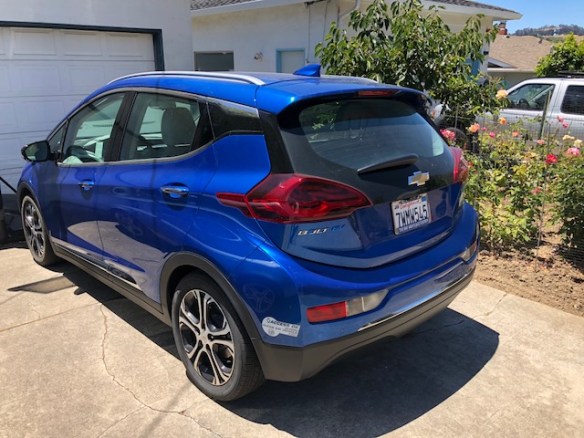
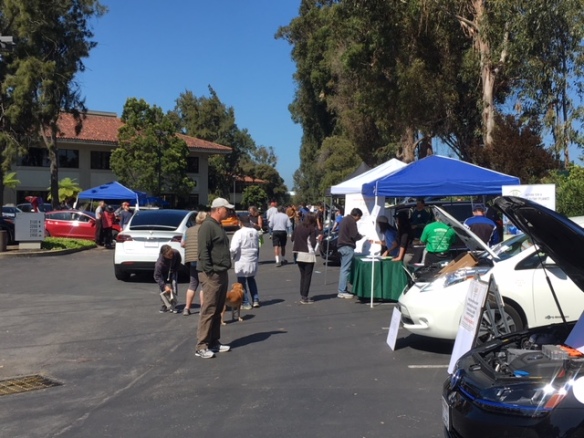
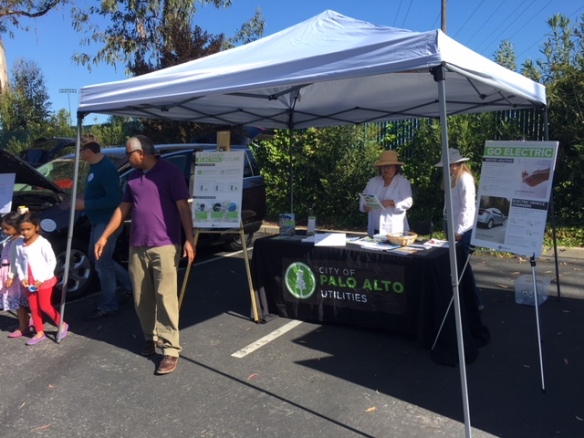
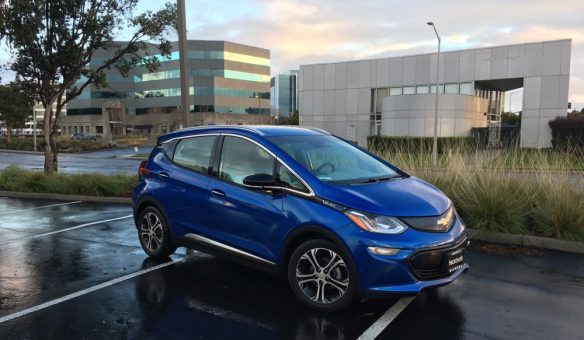
I am doing everything I can to encourage people to check out EVs and see the benefits. I’ll be hosting an event at my office on September 13th and participating in another one on September 16th as part of National Drive Electric Week. These low-pressure parking-lot meetings let people check out the cars with no salesmen and learn more about the smooth, quiet, quick-accelerating EVs from the owners themselves. I enjoy sharing my Kinetic Blue 2017 Chevrolet Bolt EV, and people are often amazed at what they see and experience.

My Chevrolet Bolt EV at the 2017 National Drive Electric event in San Mateo, CA
For me, the last gas car just happened. After 26 and a half years of automotive writing, I have finally said “The End” to testing cars that run only on gasoline. The final car is the new Hyundai Kona small crossover. An electric version with an amazing 258-mile range is on its way, but I wanted to sample the car now, so I drove the gasoline version for a week. The car’s shape, size, styling, and driving feel are what buyers want, so an electric one will be a great choice. It could even be my next car when my Bolt EV lease ends on January 8, 2020. And look at that Lime Twist paint!
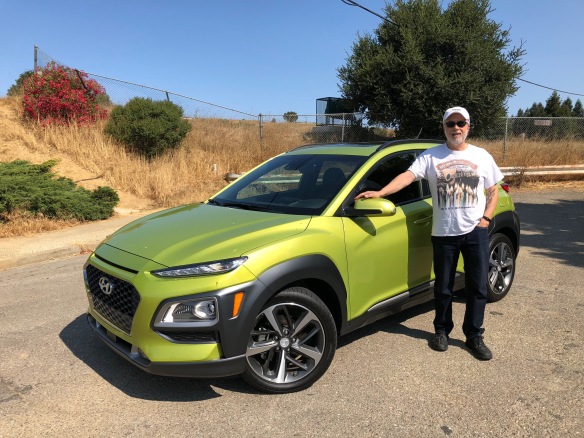
2018 Hyundai Kona
Although I would really prefer to limit myself to testing only pure battery electric vehicles (BEVs), there simply are not that many out there yet, and there are reasons to encourage some folks to opt for hybrids. So, my compromise is–if it has an electric motor, I’ll give it a test, even if there’s an engine in there, too. If it’s a plug-in hybrid, I’ll try to minimize gasoline consumption.
Hybrids and plug-in hybrids still offer significant environmental benefits over traditional cars, and may be the only viable option for some people with limited access to charging. Hydrogen fuel cell vehicles are still a bit of a science experiment, but, if you live near a hydrogen station, they can do the job.
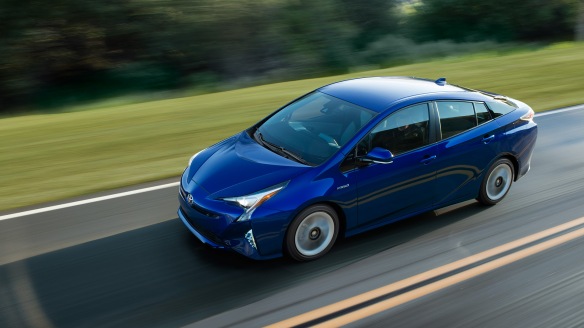
The latest Prius
The hybrid car has had a good run, thanks particularly to Toyota, who introduced the first Prius at the end of the 20th century. They’ve sold millions of them around the world since. Hybrids can as much as double your fuel economy and half your carbon emissions by pairing a gasoline engine with an electric motor. Sometimes, they enable driving without the engine–while requiring zero effort from the driver.
A plug-in hybrid, with a chargeable battery on board, allows some pure EV miles, often in the 20-30 mile range. This means you can plug it in–even at home in your 110-volt socket in the garage–and get to work–and maybe even back–with no gas. But with the engine and gas tank still in the car, you can hit the road and go anywhere you want anytime. Downside? When you’re driving it as an EV, there’s still a lot of extra weight with that idle engine in there.
A pure electric car is great, but you need to consider how and where you’ll charge it. Sale and lease prices are a bit higher than gas cars today, mostly because of the high price of batteries, and there aren’t that many model choices yet. But that’s changing as batteries get cheaper and more models are introduced. The lower price of electricity versus gasoline and the lack of significant maintenance both help reduce the costs of driving an EV.
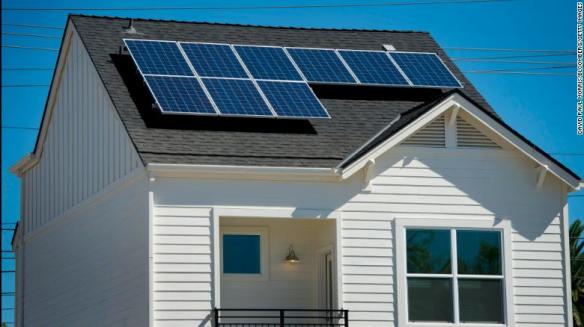
Of course, hanging over this entire discussion is the issue of where the electricity is coming from. If it’s from the solar panels on your roof, that’s about as clean as it gets. Some communities have plans where you can sign up with your energy provider for sustainable energy from wind, solar, hydroelectric, and geothermal, which is a step forward. If your power comes from coal, your EV is not going to be as clean, but it will get better over time as the electric grid moves to renewable sources.
It’s taken a century to set up our electrical grid and it’s not going to change overnight. But we need to do what we can, as fast as we can, to move to renewable energy.
For a quick explanation of the climate crisis, please read A Dose of Climate Reality





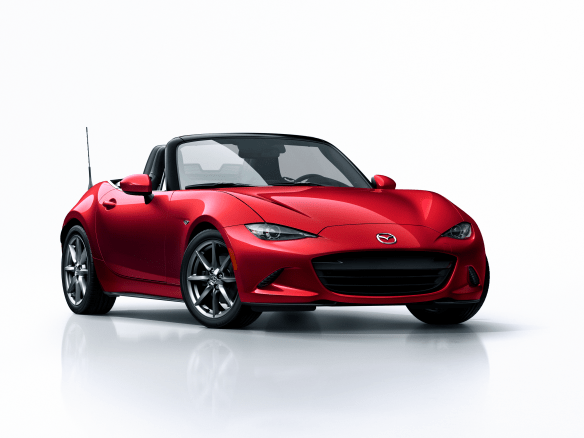 It’s great for your health to eat lean chicken and sautéed vegetables every day. But sometimes you want a big, juicy hamburger. The
  There’s nothing quite like driving an open car, and in the Miata, all you do is drop the top and go. Ever since day one, you can unlatch the top and just flip it behind you. Although later models have introduced power tops and a couple styles of folding hard tops, you’ve always had the open-air option.
 It’s amazing how many things there are to smell as you drive—most of them interesting or pleasant. Yes, there are diesel buses, livestock, and trash fires, but I also remember food from restaurants, freshly baked bread, and newly-mown grass. You also get to sample every possible kind of music blaring out of fellow drivers’ windows—or they may be driving topless, too.
 Mazda’s little million-selling sports car provides direct connection to the road, with steering, close-ratio manual shifting, and responsive braking. I’ve tested models with the manual six-speed and the automatic, and vastly prefer the former. With its short little lever and feeling of being connected to actual gears, you can’t beat it. In my most recent week-long test car, I was stuck in a 2 hour and 10-minute traffic jam on the way home from work, and even in those conditions I’d rather sample the silky manual six than an automatic.
 It takes some dexterity to get yourself into the low driver’s bucket set, and some strength and care to extricate yourself. I can still maneuver OK, but at nearly 65, I take it easy. My wife has no love for these roadsters, but that’s my fault. When I had test Miata number one, I insisted she climb into and out of it late in her pregnancy with our son. She’s never forgotten it, and she was equally unimpressed with the 2018 model.
 Miatas have their fans—lots of them. There are
  Riding low takes a little getting used to. Once you’re inside, there feels like enough room, but when you look out either side window, it’s likely directly at someone’s wheel. When you look out the windshield, you’ll see rakishly canted fenders, in the latest
  The original Miata featured a simple, plain interior, with the right proportions but no attempt at luxury touches. Its black plastic was well crafted, but not fancy. There were silver rings around the gauges, though, a tip of the hat to the cars of yore. There was a tachometer in the middle of the instrument panel, where it resides to this day. Cloth seats were standard.
 The car has grown more and more elegantly designed over the years, with sculpted door panels and the neatly trimmed interior fittings. Beautiful metallic accents on the steering wheel, transmission surround, air vents, and door handles lend an upscale air. The Kodo Design theme blends a flow of soft curves and edges across the doors and dash. The center console not only gives your arm a resting place but sits above the driveshaft that conveys the engine’s power to the rear wheels—just like in those old-fashioned MGs, Triumphs, and Austin-Healeys.
 My 2018 test car, as mid-level Club model, had some significant extras. The Machine Gray paint, a serious shade, added $300 to the tab. I personally would prefer red or blue. The car has come in a variety of colors over the years. One especially nice setup one combined British Racing green paint with a tan leather interior.
 My tester flaunted a dark red cloth top—a no-cost option. The big upgrade, however, was the Brembo BBS Recaro package, at $4,470. It transformed the car inside and out, with gripping
  The little roadster is economical, with EPA numbers of 26 City, 33 Highway, and 29 Combined. I averaged 31.4 mpg in a week that had much too much commuting and too little back road running. The EPA Green numbers are a disappointing 3 for Smog but a solid 6 for Greenhouse Gas.
 You’d think a little car with a cloth top would be a drag in the rain, but I felt cozy and safe, and the raindrops on the insulated top created a great atmosphere. And, unlike its European forebears, the MX-5, assembled in Hiroshima, Japan since its birth, doesn’t leak.
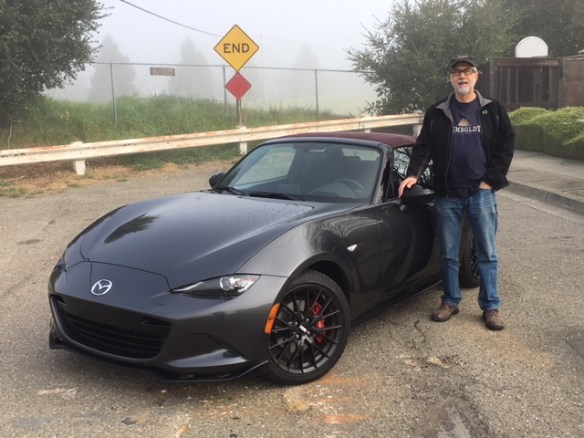 In an era of basic cars starting close to $20,000 and mid-level Toyota Camrys approaching $30,000, the Miata’s price doesn’t seem out of line. My Club-level test car started at $29,155, but with extras and delivery, hit $35,240. A 2018 MX-5 Sport with no extras will set you back just $26,185. The original car debuted at $15,000, but had a lot fewer features, and that was 28 years ago! Interestingly, demand was so high at first that early adopters were paying $5,000 or more above sticker to get the cars.
 Consumer Reports has given the Miata high praise over the years and ranked the 2017 model at 79 – a fine score. Owners have reported better than average reliability, and with the amount of affection the little car generates, they care for their babies. You’ll see plenty of all four generations on the road. The car magazines love it.

 stevegoesgreen